Corvynimarix
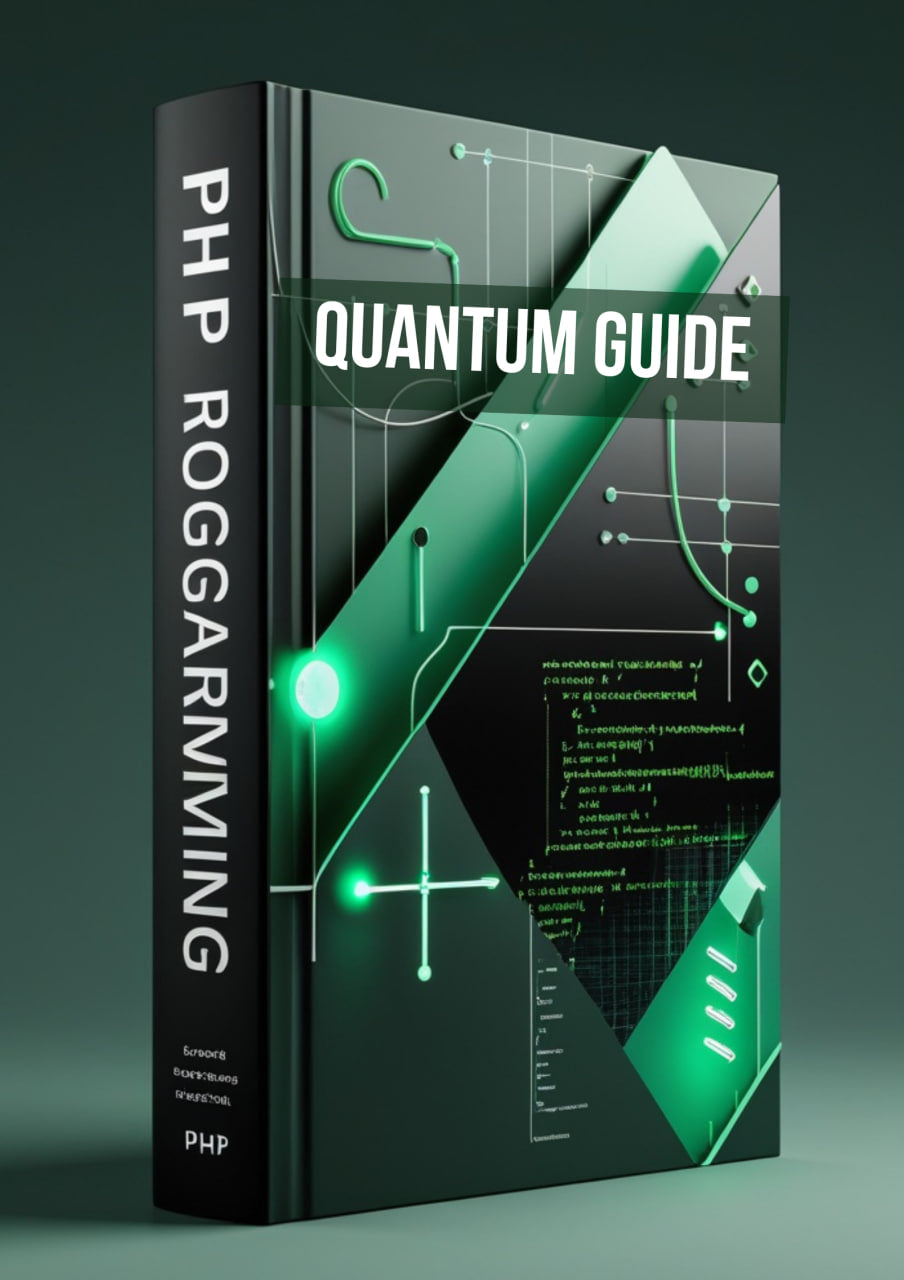
QUANTUM GUIDE
QUANTUM GUIDE
Couldn't load pickup availability
- 📄 Digital file available after purchase
- ♾️ Long-term availability
- 🔐 Secure checkout
- 🗓️ Content updated in 2026
Self-paced learning overview
1. Problem Statement
As PHP applications begin coordinating multiple services and background operations, ordinary request-response structures may no longer describe the entire application workflow. Tasks such as processing events, handling notifications, updating records, and communicating with external services introduce dependencies that extend beyond individual requests. Message queues, asynchronous execution, and concurrent operations require careful coordination to prevent duplicated actions, inconsistent state, and incomplete processing. Distributed components also introduce communication interruptions, delayed responses, repeated messages, and failures that need separate handling strategies. Without a structured approach to these situations, application behavior becomes harder to analyze, test, and maintain.
2. Solution
Quantum Guide introduces advanced PHP engineering concepts through a connected study of event-driven systems, asynchronous execution, and distributed workflows. The course explains how events, message queues, workers, and application services coordinate operations across different components. Dedicated modules examine idempotency, retry policies, transactional outbox patterns, event sourcing, and compensating actions. Further topics cover Fibers, event loops, process coordination, backpressure, fault isolation, and external API communication. An extensive applied project combines these concepts into an asynchronous content publishing system with defined processing stages, recovery procedures, diagnostic records, and comprehensive testing scenarios.
3. What's Inside
-
Module 1: Advanced Event-Driven Architecture
Introduction to event-driven architecture as a model for coordinating independent application components. Studying event producers, consumers, dispatchers, subscribers, and communication boundaries. Exploring the differences between direct method calls and event-based communication, including the effects of asynchronous execution on application structure. -
Module 2: Domain Events and Event Contracts
Designing domain events that represent meaningful changes within an application. Working with event names, identifiers, timestamps, payload structures, and event versioning. Examining immutable event objects, naming conventions, and the distinction between domain events and technical notifications. -
Module 3: Event Dispatchers and Subscribers
Building event dispatching mechanisms that distribute notifications to registered handlers. Studying subscriber registration, handler resolution, event ordering, multiple subscribers, and exception handling during dispatch. Practical exercises introduce a custom event dispatcher and demonstrate how individual handlers can process the same event independently. -
Module 4: Message Queue Architecture
Exploring message queues as communication structures between independent application components. Studying message producers, queues, consumers, routing rules, message envelopes, and queue separation. Examining how asynchronous communication changes the relationship between request processing and background operations. -
Module 5: Producers, Consumers, and Worker Lifecycles
Developing message producers that create structured jobs and consumers that process them. Studying worker initialization, message retrieval, processing stages, acknowledgements, graceful shutdown, and worker supervision. Practical examples introduce worker responsibilities and the organization of background processing pipelines. -
Module 6: Message Delivery Semantics
Examining at-most-once, at-least-once, and exactly-once delivery concepts. Understanding why repeated delivery can occur and why application-level idempotency remains important even when a queue provides delivery controls. Studying acknowledgement timing, message visibility, processing confirmation, and the relationship between delivery semantics and data consistency. -
Module 7: Idempotent Operations and Duplicate Detection
Designing operations that produce consistent application effects when the same command or message is processed repeatedly. Working with operation identifiers, idempotency records, duplicate detection, unique constraints, and stored processing results. Practical exercises examine repeated webhook delivery, duplicate background jobs, and safe handling of repeated requests. -
Module 8: Retry Policies and Dead-Letter Queues
Developing retry strategies for operations that encounter temporary failures. Studying fixed delays, exponential backoff, retry limits, failure classification, and delayed message processing. Introduction to dead-letter queues as a separate location for messages that cannot be processed under ordinary retry rules. Exercises cover message inspection, controlled reprocessing, and failure reporting. -
Module 9: Transactional Outbox Pattern
Exploring the transactional outbox pattern for coordinating database changes with event publication. Studying the relationship between domain updates, outbox records, transaction boundaries, and background dispatchers. Practical examples demonstrate how an event can be recorded within the same database transaction as the related application change and published through a separate processing stage. -
Module 10: Event Logs and Event Sourcing
Studying event logs as records of changes within an application. Exploring event sourcing concepts, event sequence ordering, aggregate reconstruction, historical state representation, and event replay. Examining the distinction between storing current state and rebuilding state from recorded events, including the implications for application maintenance and data evolution. -
Module 11: Sagas and Compensating Actions
Introduction to saga-based coordination for workflows that involve several independent operations. Studying sequential steps, intermediate states, failure points, compensating actions, and workflow recovery. Practical scenarios demonstrate how a multi-stage operation can be coordinated when individual components cannot participate in one shared database transaction. -
Module 12: Scheduled and Delayed Jobs
Organizing background operations that must run at a specified time or after a defined delay. Studying scheduled tasks, delayed messages, recurring execution, job identifiers, execution windows, and duplicate scheduling prevention. Practical examples include content publication schedules, periodic record maintenance, and delayed notification processing. -
Module 13: PHP Fibers and Cooperative Concurrency
Introduction to Fibers as PHP language structures for suspending and resuming execution. Studying Fiber creation, suspension, resumption, return values, exception propagation, and lifecycle management. Examining cooperative concurrency and the distinction between execution suspension and parallel processing. The module also explains how a scheduler can coordinate multiple Fibers when the surrounding runtime supports such an execution model. -
Module 14: Event Loops and Non-Blocking I/O Boundaries
Exploring event loops as coordination mechanisms for operations that wait for external input or output. Studying task registration, readiness notifications, scheduling, suspension points, and completion handling. Examining non-blocking I/O concepts and the separation between application logic and runtime-specific asynchronous capabilities. -
Module 15: Worker Pools and Process Coordination
Designing worker pools for processing independent background tasks. Studying worker allocation, task distribution, process lifecycle management, graceful termination, and workload coordination. Introduction to inter-process communication concepts, shared storage, process supervision, and the handling of unexpected worker termination. -
Module 16: Shared State, Locking, and Coordination
Examining the challenges of concurrent operations that interact with shared information. Studying critical sections, mutual exclusion, optimistic locking, database locks, revision checks, and coordination through shared storage. Practical examples demonstrate how competing operations can be detected and how application rules can prevent conflicting updates. -
Module 17: Timeouts, Circuit Breakers, and Fault Isolation
Developing strategies for handling components that respond slowly or become temporarily unavailable. Studying operation timeouts, failure thresholds, circuit breaker states, recovery windows, and isolation boundaries. Additional examples examine fallback behavior, controlled retries, and preventing one failing dependency from disrupting unrelated application operations. -
Module 18: Backpressure and Rate Limiting
Exploring backpressure as a method of controlling the flow of incoming work when processing capacity is limited. Studying bounded queues, queue depth, consumer capacity, rate limiting, workload prioritization, and overload handling. Practical exercises examine how processing rates can be coordinated with available worker resources. -
Module 19: External API Integrations and Webhook Processing
Designing communication boundaries between PHP applications and external services. Studying HTTP client abstractions, request timeouts, response validation, payload mapping, and integration error categories. Further topics include webhook signature verification, timestamp checks, replay protection, duplicate event detection, and controlled processing of incoming notifications. -
Module 20: Cache Invalidation and Event-Driven Read Models
Examining how application data can be represented through read models designed for specific queries. Studying projections, event-driven updates, cache invalidation, expiration rules, stale data, and rebuilding derived information. Practical examples demonstrate how application events can update separate read structures without coupling them directly to every write operation. -
Module 21: Observability, Metrics, and Distributed Diagnostics
Developing diagnostic structures for applications that coordinate multiple components. Studying structured logging, correlation identifiers, trace relationships, processing durations, queue depth, failure rates, and worker activity. Examining how diagnostic records can be connected across requests, background tasks, and external service interactions. -
Module 22: Testing Asynchronous and Distributed Workflows
Exploring testing strategies for event-driven and asynchronous PHP applications. Writing tests for event dispatchers, message handlers, retry behavior, idempotent operations, and transaction boundaries. Studying simulated failures, duplicate message scenarios, time-dependent operations, and integration boundaries. Additional exercises examine deterministic testing of asynchronous workflows and verification of recovery behavior. -
Module 23: Applied Systems Studio — Asynchronous Content Publishing Engine
Developing a modular PHP application that coordinates the submission, review, scheduling, and publication of educational content. The architecture includes domain events, message queues, background workers, application services, repositories, and structured processing records.The final stage includes simulated worker failures, duplicate message delivery, interrupted database operations, recovery scenarios, diagnostic analysis, and a comprehensive architectural review.
4. Who Is This For?
A suitable choice if you:
- Already have experience with object-oriented PHP and application architecture.
- Want to explore event-driven architecture and asynchronous task processing.
- Are interested in message queues, background processes, and worker pool organization.
- Want to understand idempotency and repeated message handling.
- Would like to study transaction boundaries, the outbox pattern, and event sourcing.
- Are interested in PHP Fibers, event loops, and process coordination.
- Want to expand your knowledge of error recovery, retries, and workload management.
- Are looking for learning materials on building complex backend systems.
May not be suitable if you:
- Have not yet studied fundamental PHP syntax.
- Have not worked with classes, interfaces, services, and repositories.
- Are looking for introductory materials on HTML forms, arrays, and simple functions.
- Expect an exclusively theoretical overview without architectural exercises.
- Do not plan to study communication between independent application components.
5. What You'll Learn
By studying Quantum Guide, you will explore the following areas:
- Principles of event-driven architecture and component communication.
- Designing domain events and message contracts.
- Creating event dispatchers and handlers.
- Organizing message queues and background tasks.
- Building producer-consumer structures.
- Understanding message delivery models.
- Developing idempotent operations and duplicate detection mechanisms.
- Configuring retry strategies and dead-letter queues.
- Applying the transactional outbox pattern.
- Exploring event sourcing and event history replay.
- Coordinating multi-stage operations through the saga pattern.
- Organizing scheduled and delayed jobs.
- Working with PHP Fibers and cooperative execution.
- Understanding event loops and non-blocking I/O.
- Organizing worker pools and process communication.
- Managing shared state and concurrent changes.
- Applying timeouts, circuit breakers, and fault isolation.
- Controlling workload through backpressure and rate limiting.
- Building integration boundaries and processing webhooks.
- Organizing caching and read model updates.
- Structured logging, metrics, and diagnostics.
- Testing asynchronous workflows and error recovery.
- Designing a complex PHP application with multiple independent components.
6. Refund Information
Refund conditions for Quantum Guide are determined by the published Corvynimarix Refund Policy. Before placing an order, we recommend reviewing the refund criteria, request submission procedure, and applicable review timeframes.
1. What is included in the PHP courses?
1. What is included in the PHP courses?
Each course contains structured learning modules, explanations of programming concepts, PHP code examples, and practical exercises. The exact list of topics and materials is provided on the corresponding course page.
2. Are the courses suitable for beginners?
2. Are the courses suitable for beginners?
The collection includes materials for different levels of preparation. Beginners can start with fundamental PHP concepts, while other courses cover more advanced subjects and approaches to organizing program code.
3. How do the course tiers differ?
3. How do the course tiers differ?
The tiers differ in the number of learning modules, depth of subject coverage, complexity of examples, and range of practical materials. Each subsequent course expands on earlier topics and introduces additional areas of PHP development.
Share